
Despite Bleak Political Times, Hanan RRG Continues to Serve Refugees
Since Trump took office in January, refugee resettlement in the U.S. has been mostly halted. Trump has dismantled federal refugee resettlement programs, effectively leaving them up to the state level.
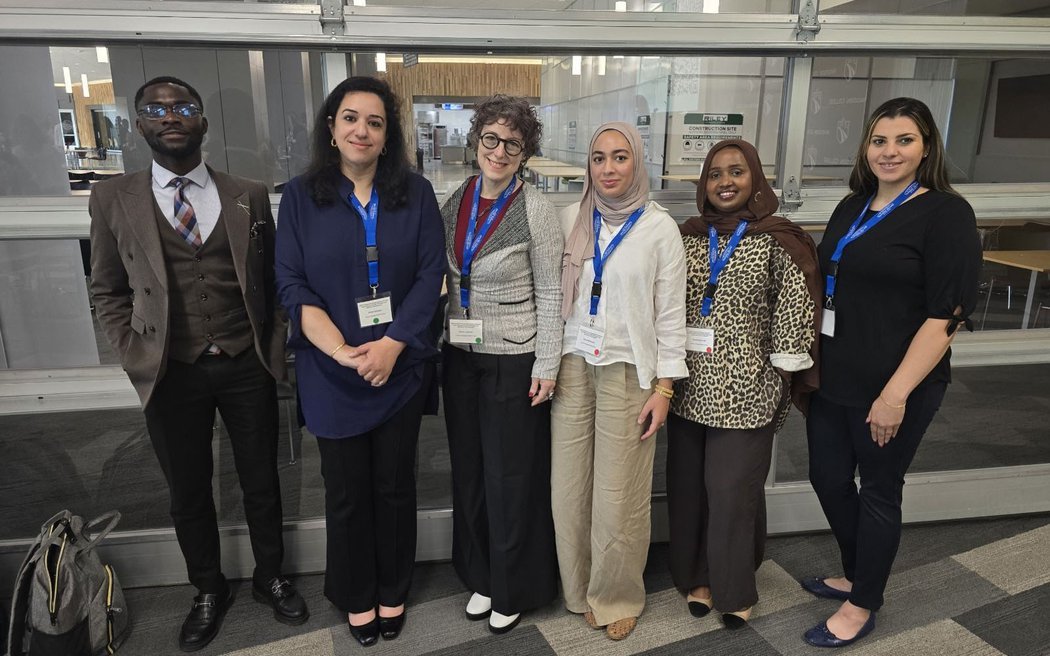
Refugees to the U.S. often resettle in cities depending on where they have family or community ties. Milwaukee’s Hanan Relief Group, founded in 2016, is providing sustainable, long-term solutions for immigrants in Wisconsin, acclimating refugees from all over the world. In fact, Milwaukee has the largest Rohingya community in the U.S., of whom Hanan has served many. Over the years, the organization has also served many Afghan, Syrian, Ukrainian, Ukrainian, Congolese, Venezuelan and Nicaraguan refugees.
Since President Trump took office in January, refugee resettlement in the U.S. has been mostly halted, with the exception of Afrikaners (white South Africans) and Special Immigrant Visas (SIVs) for Afghan and Iraqi refugees who worked with the U.S. Army during the wars in Afghanistan or Iraq. Trump has dismantled federal refugee resettlement programs, effectively leaving them up to the state level.
Uma Abdi, Hanan’s Refugee Program Director, remembers receiving the “stop work” order from the U.S. government right after the organization had resettled nearly one hundred individuals between December and January. “We had to stop providing all services to refugees. There was a lot of chaos and confusion because those individuals still needed services.”
Every Aspect of Life
Hanan is essentially the main point of contact for refugees regarding practically every aspect of their lives. This organization assists them with transportation, housing, public benefits, healthcare, employment and education. While reception and placement services may support refugees for only a 90-day period after they enter the country, other programs are available to them for up to five years.
“When we first received that order, clients were basically left on their own,” Abdi says. “Then we got another email from the state department saying that whoever arrived before January 21 we could continue to serve but had to close their case by the middle of February.”
Along with the “stop work” order, Hanan lost much of its funding for refugee reception and placement, which totals more than half a million dollars. Governmental cuts will end funding for its Afghan and Ukrainian refugee programs after next year. “It was a big blow to us,” Abdi confirms. “We had to lay individuals off because we didn’t have the funds to pay all the staff we had.”
Raising Funds
Thankfully, Wisconsin has a state-funded Refugee Resettlement Program that has helped Hanan continue to provide services to refugees already in Milwaukee. As the organization is forced to pivot, Hanan is currently looking into grants and fundraising. “That is our main focus right now,” Abdi states. “Every day, it’s been something new with this administration.”
One crucial way Hanan helps refugees is by providing legal services, which is made possible thanks to longtime volunteer Barry McCormick becoming a Partially-Accredited Representative. After undergoing a rigorous training process, McCormick became authorized by the Department of Justice to assist people in seeking immigration benefits.
“Most of what I’ve been doing is helping refugees apply for green cards,” McCormick explains. “Being a refugee means that you don’t really have a place where you have security and legal status; you are dependent on other peoples’ charity and goodwill.” He adds, “If you go to a private attorney to file a green card application, it’s thousands of dollars; if you come to Hanan, it’s 75 dollars.”
Decades for a Green Card
Acquiring a green card, which makes immigrants permanent residents, can take decades. To make matters more difficult, the Trump administration has halted the processing of a number of green card applications. Stated reasoning for this pertains to better security checks, but as McCormick points out, refugees are already highly scrutinized, as they go through a vetting process that can take years.
“I’m overwhelmed by the complexity and craziness of American immigration law and policy,” McCormick says. “It feels far more based in fear and hatred than fact.”
When Hanan first receives refugees, the organization sits down with them and goes over their goals, plans and priorities. “Almost every single family’s first goal is to find employment,” Abdi elaborates. “Usually their second goal is to make enough money to support their family overseas, because the majority of these people have left family behind.”
Upon entering the U.S., many refugees face significant cultural gaps and language barriers. McCormick notes that many have not had adequate access to medical or dental care, or winter clothing. “The amount of aid that we’re actually giving families is really minimal. This is not some kind of red carpet treatment with all these necessities provided.”
That said, McCormick observes how refugees are incredibly grateful for the opportunity to come to the U.S. and are doing their very best. “People are working hard, minimum wage jobs. They can’t wait to get back to work and support their families.”
Hanan Relief Group is always in need of volunteers, whether it be for driving clients to appointments, working events, or assisting with English as a Second Language (ESL). Monetary donations are welcome as well. Abdi concludes, “In America, people are afraid of the unknown. Maybe they’ve never met a refugee. Maybe they’ve never talked to somebody who doesn’t look like them. You converse, and you realize that you’ve got the same aspirations, same goals and all of these things you have are similar rather than different.”
“What more human thing can you do than to try and help somebody live out their days in dignity with their family?” McCormick poses. “That’s what we’re about here—being part of the solution instead of being part of the problem.”
Source: Despite Bleak Political Times, Hanan Relief Group Continues to Serve Refugees
